
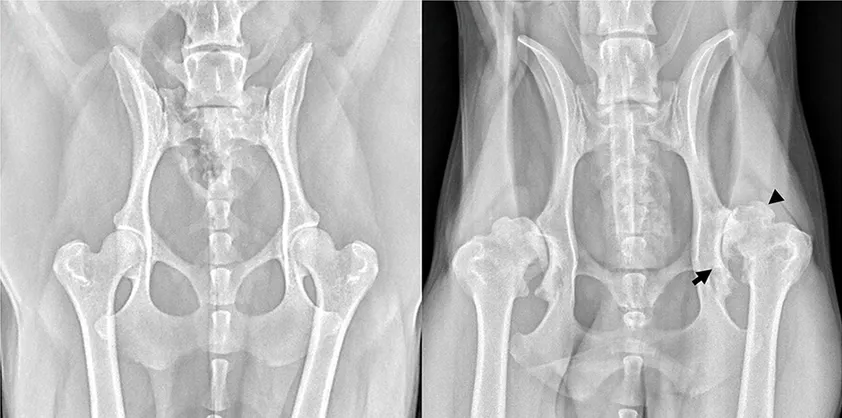
Why traditional markers for osteoarthritis are failing?
Osteoarthritis (also known as degenerative joint disease) is becoming increasingly common in dogs of all ages and breeds. While certain breeds are genetically predisposed, we are now seeing cases appear earlier and more frequently than ever before. Have you ever wondered why?
Chronic, uncontrolled inflammation within the joints doesn’t just stay local — over time it can become systemic, placing stress on the immune system and potentially contributing to other health issues.
Traditionally, pet parents wait until there are clear signs of lameness or radiographic changes before seeking help. But by then, significant joint damage has already occurred. What if there was a way to detect osteoarthritis much earlier — before your dog starts limping — and at a fraction of the cost of X-rays?
By monitoring markers such as serum hyaluronic acid (sHA), which reflects joint capsule health, and C-reactive protein (CRP) , a marker of systemic inflammation, we can catch the earliest stages of joint disease. This means you can begin interventions sooner, support your dog’s mobility, and slow disease progression before irreversible damage sets in.
What is serum hyaluronic acid and why it matters?

Hyaluronic acid (HA) is a natural substance found in your dog’s joints — it helps keep them lubricated and moving smoothly. When there is damage or early arthritis in a joint, some of this HA leaks out into the bloodstream.
By measuring serum HA (sHA), we can detect these early leaks, often before you notice limping or stiffness. This makes sHA a powerful tool for catching osteoarthritis in its earliest stages. If your dog is taking joint supplements or medications that help produce more joint fluid, sHA levels may rise — and that’s usually a good sign, showing the joints are responding. Over time, with the right treatment plan, sHA levels can even return closer to normal, reflecting improved joint health.
What is canine reactive protein (CRP) and why it matters?
C-reactive protein (CRP) is a marker of inflammation in the body. When your dog’s immune system senses injury, infection, or ongoing inflammation — like in the case of arthritis — CRP levels go up.
Measuring CRP gives us a snapshot of how inflamed your dog’s body might be overall, not just in the joints. This is valuable because chronic inflammation doesn’t just affect mobility — over time, it can put strain on other organs and the immune system too. By tracking CRP levels, we can see whether your dog’s treatment plan is helping to calm inflammation and support whole-body health.
Measuring both serum hyaluronic acid (sHA) and C-reactive protein (CRP) gives us a fuller picture of your dog’s health. sHA tells us what’s happening inside the joints — catching early signs of osteoarthritis — while CRP shows whether inflammation is affecting the whole body. Together, these tests allow for earlier intervention, more targeted treatment plans, and better long-term outcomes for your dog’s mobility and overall well-being.

A simple blood test is all it takes
Give Your Dog the Gift of Healthy Joints
You don’t have to wait until your dog is limping to take action. By checking simple markers like sHA and CRP early, you can catch joint issues before they become painful and keep your dog active and happy for longer.
If your dog is over two, a breed prone to joint problems, or you’ve noticed even subtle stiffness, talk to your vet about early screening. A few simple steps today can make a lifetime of difference for your dog’s mobility and quality of life.
If you’d like support on where to start, we’d love to help you explore the right approach for your dog — from early testing to tailored mobility plans.