
When our dogs start to age, it’s common for pet parents to notice weakness, stiffness, or reduced stamina during walks.
The usual response I hear is: “But I walk my dog 30 minutes twice a day!”
Walking is wonderful — it keeps joints from stiffening up, supports circulation, and gives our dogs important mental stimulation. But walking alone isn’t enough to maintain strength, balance, and mobility as dogs get older.
Think of it this way: if a human only went for walks but never worked on core strength, balance, or muscle tone, they’d still lose stability over time. The same goes for dogs. To truly support mobility, we need to go beyond walking.
We need exercises that target balance, core strength, proprioception (awareness of where the body is in space), and endurance. These areas directly affect your dog’s ability to get up, move confidently, and stay strong.
Here are some simple balancing and stability exercises you can start with at home. They take only about 15 minutes, 3–4 times a week, and they can make a big difference for your senior dog.
1. Front Feet on a Balance Pad (Engaging Core + Shoulder Stability)
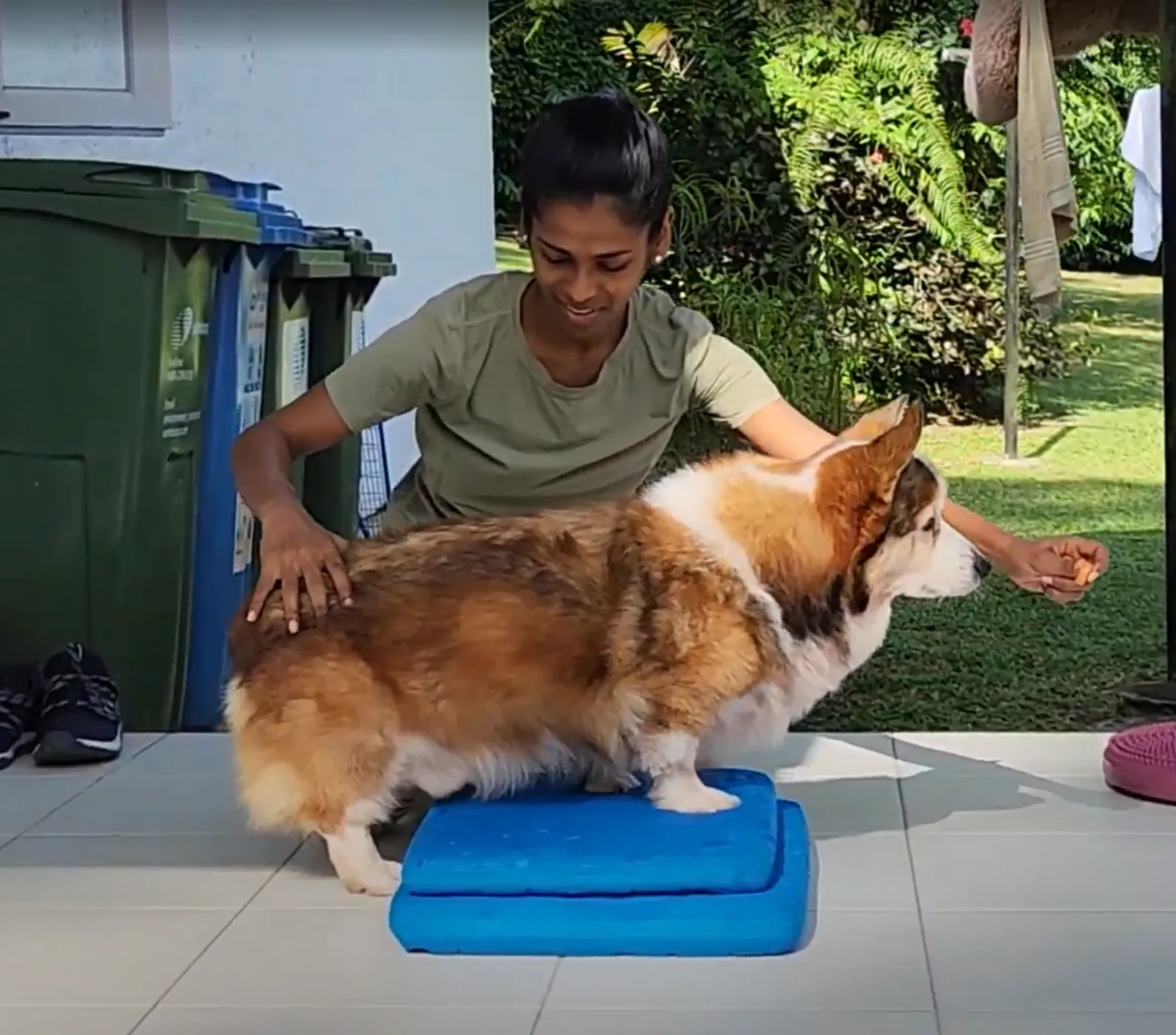
- Place your dog’s front paws on a balance pad or firm cushion while keeping their back paws on the ground.
- Use a treat to guide their head slightly side-to-side and up-and-down.
- Watch their posture: keep the spine level, shoulders square, and avoid leaning.
- This helps activate their core and shoulder stabilizers.
- Repeat the exercise with the hindlimbs on a balance pad.
- Repeat the movement by replacing the balance pads with a balance cushion.
Tip:
- If your dog struggles, start with something firm (like a yoga mat folded over) and progress to softer pads over time.
- Hold the dog treats close to their mouth so they don't lunge or charge forward quickly.
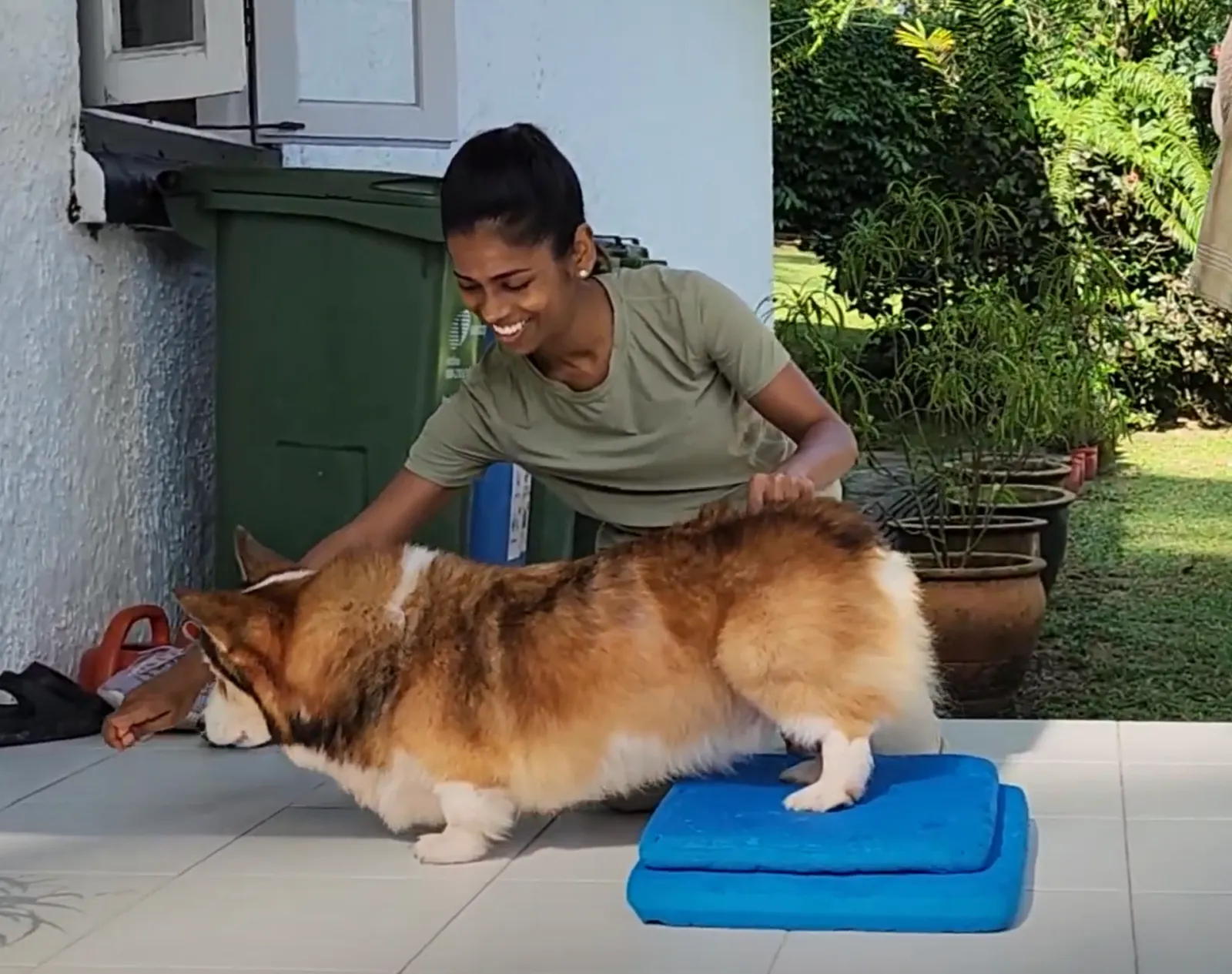
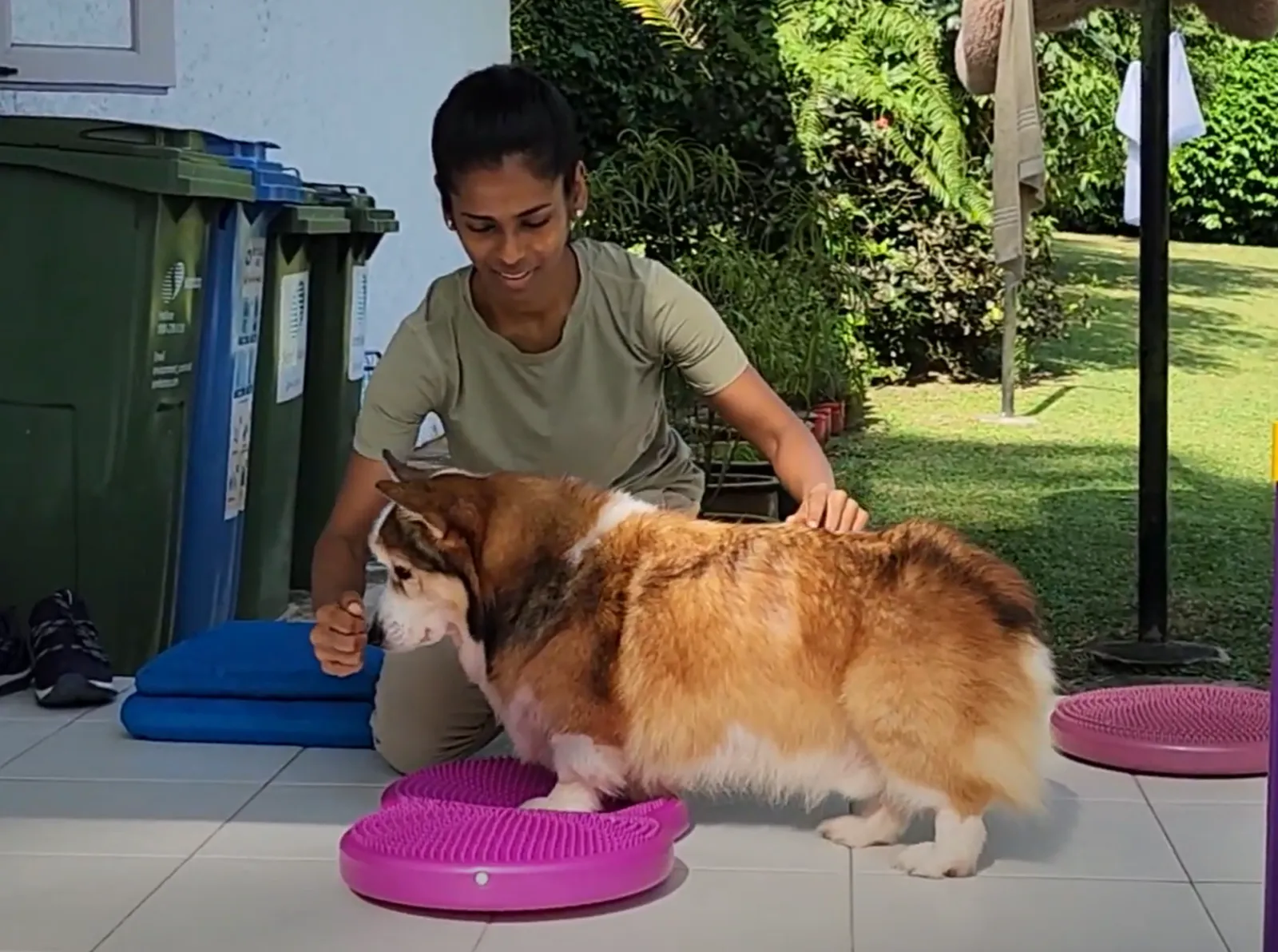
2. All Four Feet on a Balance Pad and Balance cushion (Full Body Engagement)
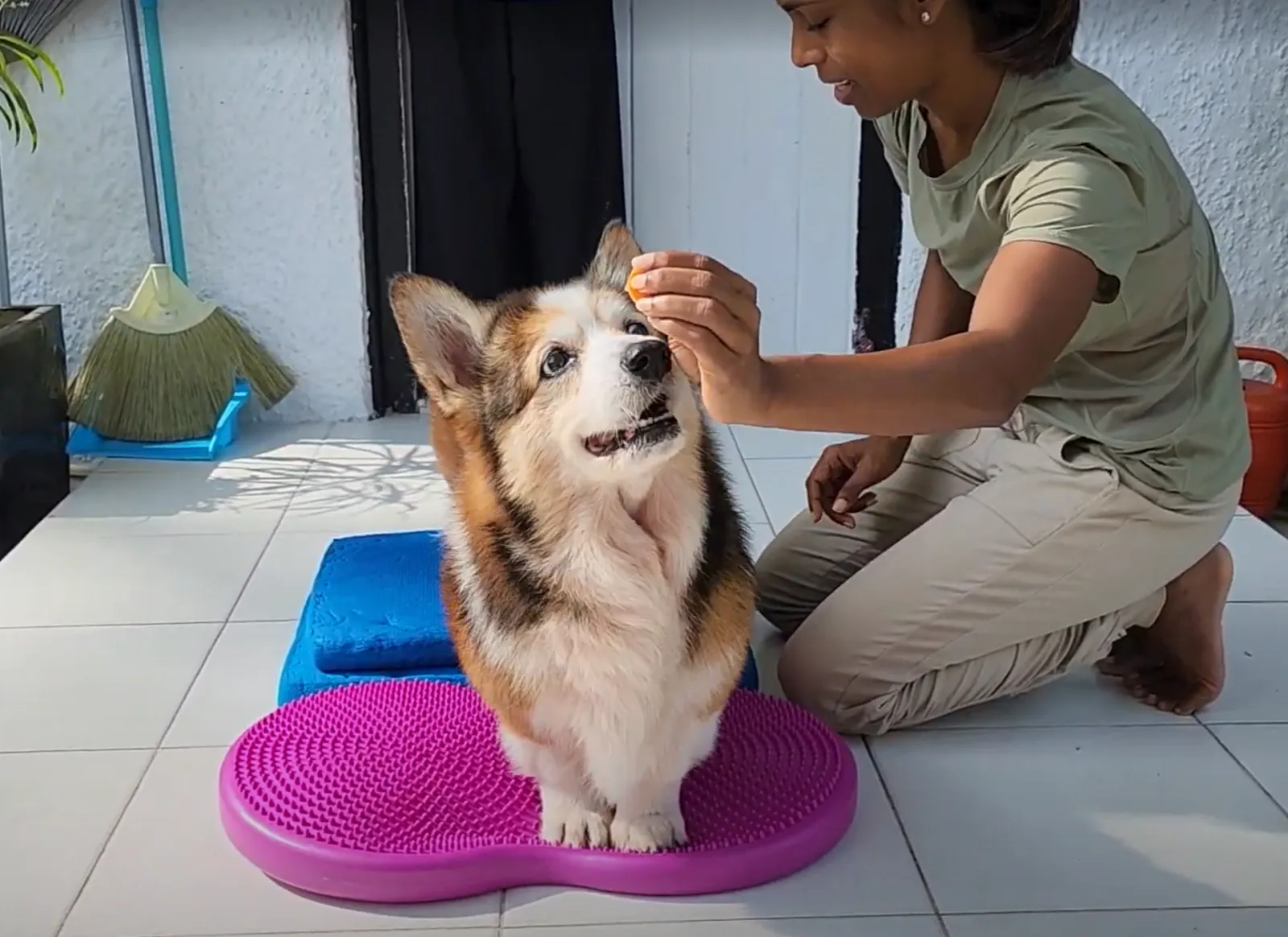
- Have your dog step up with all four paws with the front paws on one balancing surface and the hind paws on the other.
- Keep them standing tall: back straight, hips square, shoulders square, no slouching. Note the negative example in this image where the dog has the front paws close together creating a triangle shape rather than a square shape with the front limbs.
- Hold them steady if needed, and use a treat to keep their focus forward.
- This exercise improves coordination and strengthens stability muscles throughout the body.
Progression:Once they are steady, slowly lure their head in small arcs to the left and right. This challenges balance even more.
3. Sit-to-Stand on a Balance Surface (Core + Hind End Strength)
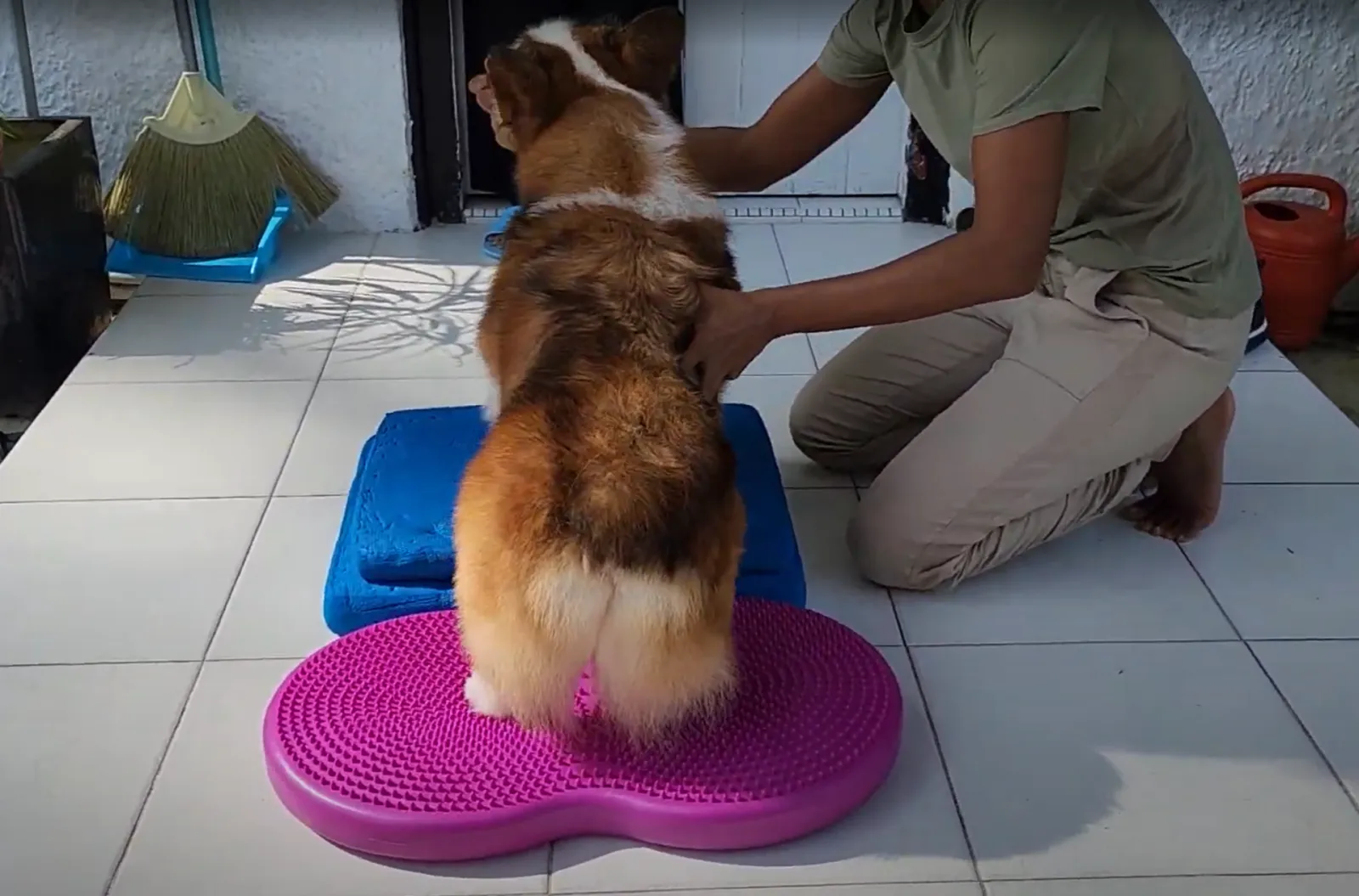
- Ask your dog to sit on the balance pad or the balance cushion.
- Lure them gently into a stand, making sure they rise evenly with both back legs.
- Repeat a few times, focusing on controlled movement rather than speed.
- This strengthens the hind limbs and reinforces proper posture.
Watch out for:
- Leaning to one side
- Pushing up with only one back leg
- Rushing the movement
General Guidelines:
✅ Keep sessions short and positive — about 15 minutes.
✅ Aim for 3–4 times a week instead of daily to allow recovery.
✅ Always work on a non-slip surface.
✅ Reward generously — make it fun!
✅ If your dog struggles or shows signs of discomfort, stop and simplify.
Walking will always be important — but it’s just one piece of the puzzle. Adding structured strength and balance exercises keeps your senior dog moving with confidence, reduces the risk of injury, and helps them stay independent for longer.